| |
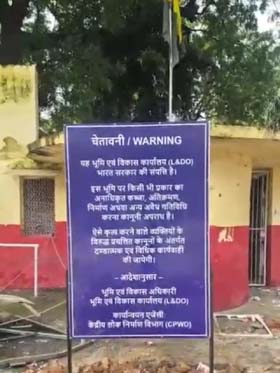
The Delhi Race Course has become history. On Thursday morning, bulldozers descended on the historic venue, demolishing the stables, Bookmakers` Ring, Winning Post and other landmarks that had witnessed generations of racing. The club`s failure to secure relief from the courts finally cleared the way for the government to reclaim the land. What was once a vibrant centre of Indian racing now lies in ruins, leaving behind memories, questions and a warning for other race clubs.
Thursday morning was a cruel sight for anyone who has been associated with the Delhi Race Course or Indian racing. Bulldozers moved into the historic race course and, with astonishing speed, began erasing landmarks that had been part of Delhi racing for generations. The gates were cleared, the Bookmakers` Ring was demolished, the stables came down and the Winning Post, saddling enclosure and photofinish camera were swept away. The remaining horses had to be moved out and, within hours, a place that had once echoed to the sound of hooves and the excitement of racegoers was reduced to rubble.

R Manjunath, who served for many years as a senior stipendiary steward, described it as a deeply disturbing sight. The buildings could be demolished in a day, he observed, but the memories, traditions and legacy created over decades could not be erased so easily. That perhaps captures the tragedy of the Delhi Race Course better than anything else. For generations of owners, trainers, jockeys, officials and racing followers, these were not simply buildings. They were part of their lives.
But the demolition was not sudden. It was the final consequence of a dispute that had been allowed to drag on for years. The Delhi Race Club had been locked in a battle with the government over renewal of its lease, while litigation and stays allowed the existing arrangement to continue. The club remained on some of the most valuable land in the capital, apparently hoping that the status quo could be preserved indefinitely.
The opportunity to prepare for an alternative was not fully used. When land was available at much cheaper prices and the club had substantial reserves, there was an opportunity to secure another home for racing. Instead, the club stayed put and continued its legal battle. By the time the government became determined to reclaim the property, the choices had become painfully limited.

With the lease having expired, an eviction notice followed. The club failed to obtain relief from the lower court and the Supreme Court subsequently refused to entertain its challenge. The courts have repeatedly upheld the right of a lessor to recover possession when a lease comes to an end, and the recent experience at Ooty had already provided a warning about the difficulties of resisting possession proceedings after the expiry of a lease.
The bulldozers were therefore not the beginning of the Delhi story. They were its final chapter.
That is what makes the episode particularly relevant to Bangalore. The Bangalore Turf Club had already encountered the same uncomfortable reality in 2010 when its dispute with the government over the race-course land reached the courts and the High Court ordered the club to vacate in six months. The government had offered possibilities involving alternative land and time for a transition, but instead of negotiating a practical solution, the club chose litigation and maintained its claim over the existing property. It eventually lost that battle, but racing survived because the government did not immediately press the matter to its conclusion.
Around the world, famous race courses have disappeared when governments decided that valuable urban land could serve a larger purpose. Singapore ended racing after more than 180 years, while Macau also closed its race course. Delhi`s vulnerability was obvious because of its extraordinary location, virtually opposite the Prime Minister`s residence and within a high-security zone. It was difficult to believe that such valuable land could remain untouched forever.
Racing has also done little to build public support for its survival. Too often, race clubs have remained insular and allowed themselves to be seen primarily as centres of gambling rather than sporting institutions. They have failed to communicate adequately that racing supports breeders, trainers, jockeys, stable staff, veterinarians and thousands of livelihoods. Nor have many clubs made their properties sufficiently useful to the wider community.
The Royal Western India Turf Club provides a useful contrast, with its race-course property also serving people who use it for walking and recreation. Such a relationship gives a race course a life beyond race days and creates a connection with the city around it.
Delhi`s final race was not decided on the track. It was decided by the expiry of a lease, years of uncertainty, failed attempts at judicial protection and, ultimately, the government`s determination to reclaim its land.
|
|




 Top
Top
